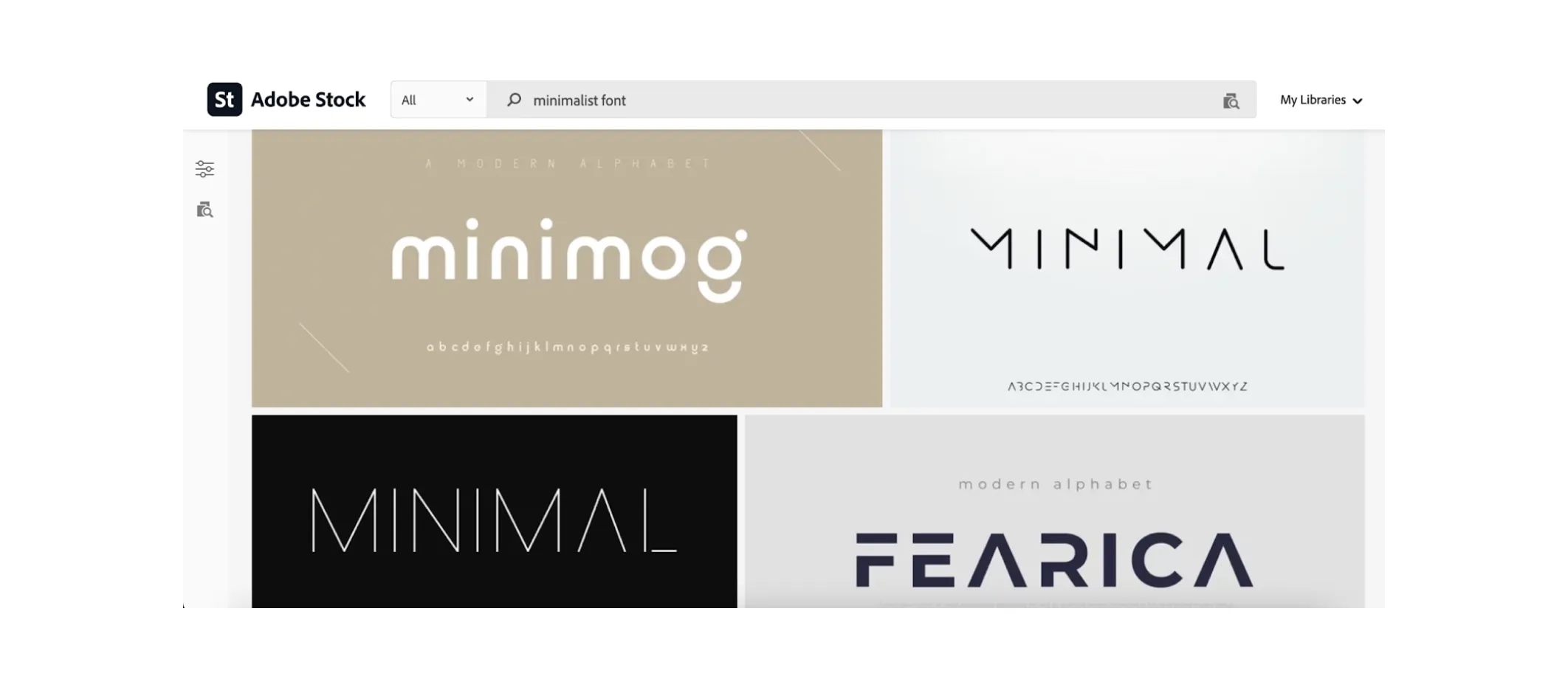
Minimalist typography, characterized by clean lines and uncluttered layouts, continues to dominate in 2025 as a design standard for clarity and professionalism. By prioritizing readability and focusing on precision, this trend eliminates distractions and delivers messages with simplicity and elegance. Ultra-thin sans serifs, careful kerning, and understated aesthetics define its appeal.
This trend aligns with the ongoing demand for functional and user-friendly designs, particularly in corporate branding and tech industries. While the minimalist style can risk becoming overly sterile, designers are finding ways to keep it fresh by incorporating subtle creative twists like asymmetrical layouts or micro-interactions.
Key Characteristics:
- Ultra-thin sans serifs: Modern fonts with a sleek and precise appearance.
- Clean lines and balanced kerning: Enhance legibility and visual harmony — especially when paired with proper leading in typography.
- Understated elegance: Minimalist layouts that let content shine without distractions.
Applications:
- Corporate branding: Communicates professionalism and modernity and often boosts content marketing for business strategies.
- Tech websites: Ensures readability and a polished aesthetic for user interfaces.
- Digital interfaces: Maintains usability while providing a clean visual experience.
Examples:
- Google’s material design language incorporates minimalist typography for clarity and efficiency.
- Leading SaaS companies use minimalist type to highlight core features and benefits on landing pages.