$29.99Original price was: $29.99.$20.00Current price is: $20.00.
IRAN ED. sTORY
iran & usa: A tale of love & war retold
The first time Iranians found about the United States was in the late 1800s through the Ottomans. Ottomas were amazed that Americans are paying them to “protect” their ships from the other side of Zamin (the Earth). Ottomans calling America “Leng-e Donya” to the Iranian Shahs. A word meaning “the other end “of the Earth. Convinced, Iranians should consider charging Americans for money somehow, the Shah asked the British Ambassador one day: “Is America Underground? How can we get to them?”. Less than 50 years since then, Oil was found in Iran. And the good gothic Midwest Americans came to the Iranians first.
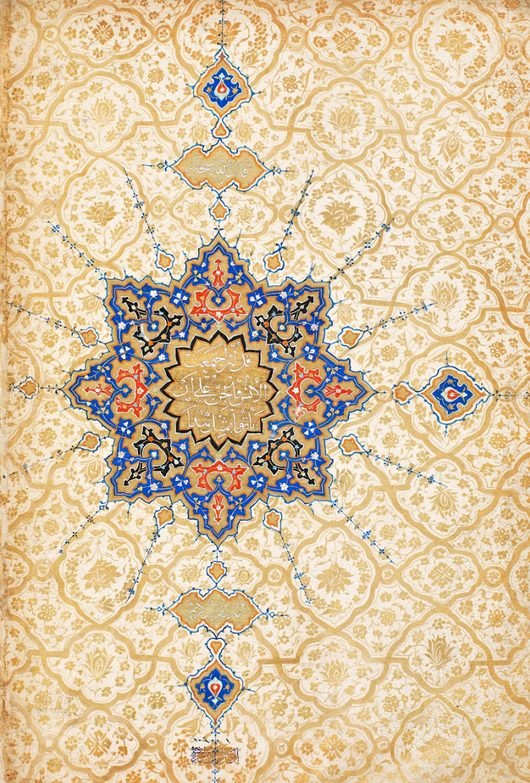
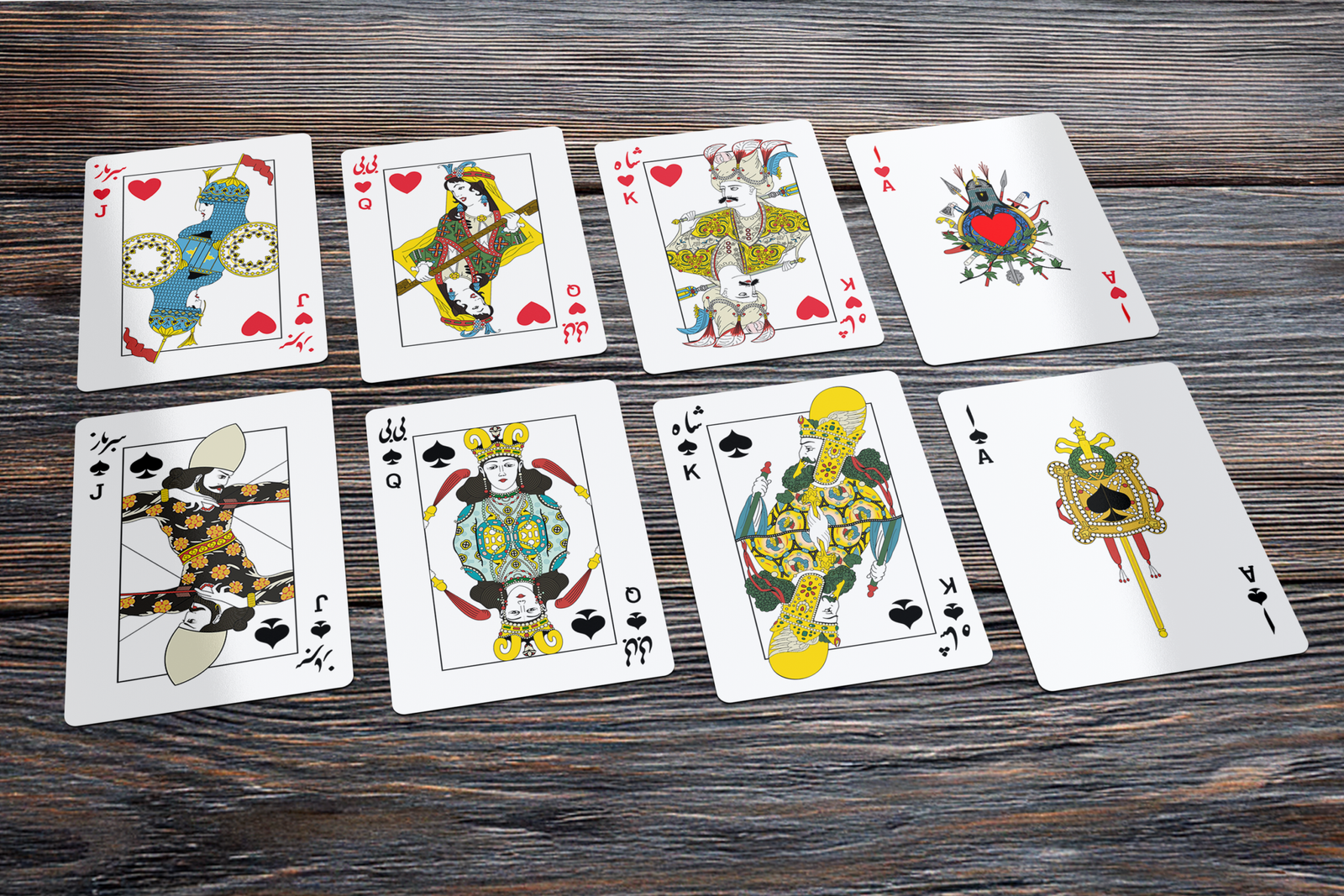
Earlier then, around 1920s, the Persian colors, motifs & calligraphy techniques were very well known to the wester traders. The techniques were taught in Mogul India and Ottoman Türkiye who appreciated the Europeans growing taste in the paisleys and deep blue pigments before Iranians did themselves.
Afghan and Turkman territories, were the Big Game, & the Russians and the British were the hunters. The Tall Ships era were gone and the big steam-powered engines were about to take over. This is where the story of our cards – the Persian Playing Cards, begins.
Tale of two Persia, the commoners and the Shahs.
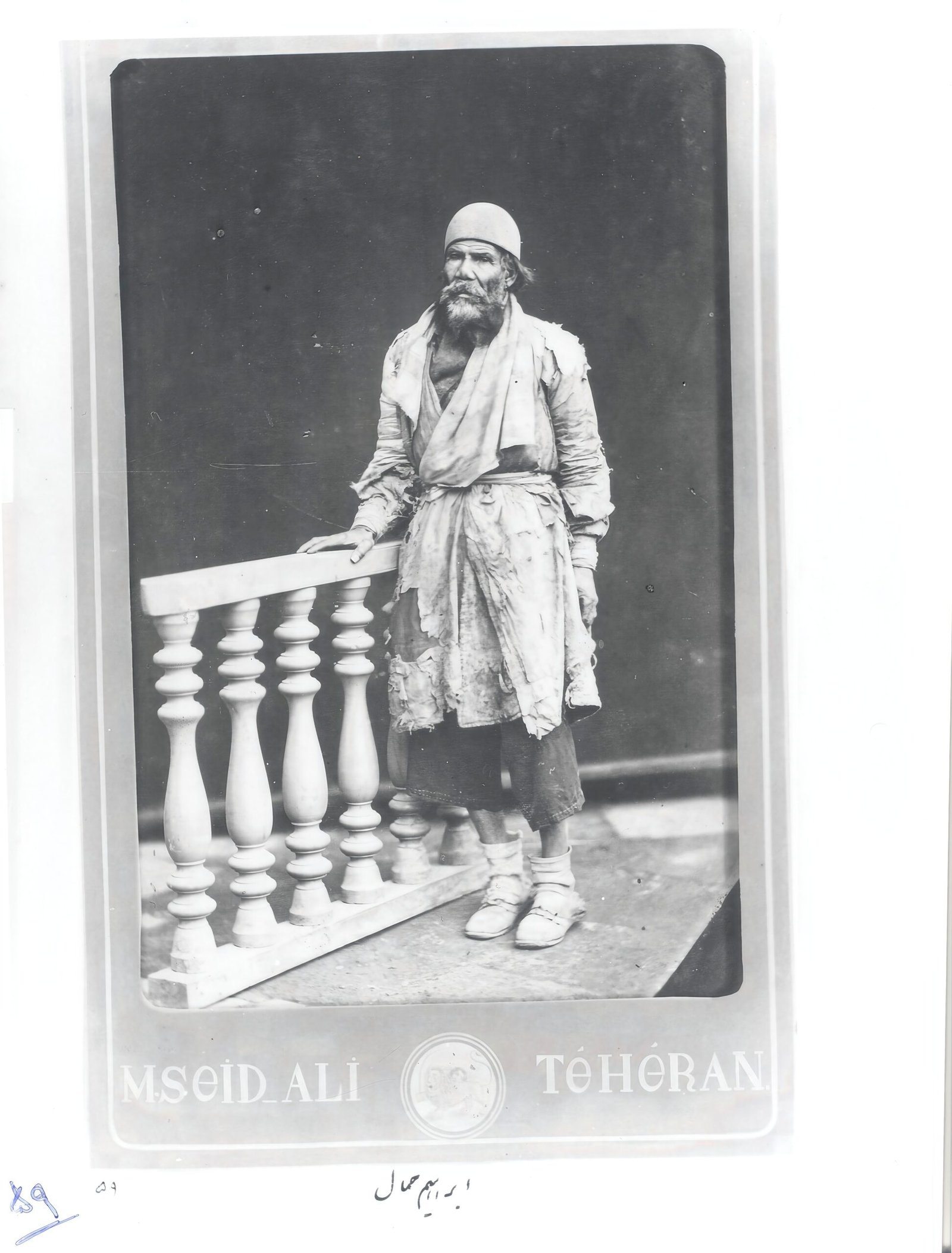
1842: First introduction of a camera and early photographic experiments in Tehran, Iran.
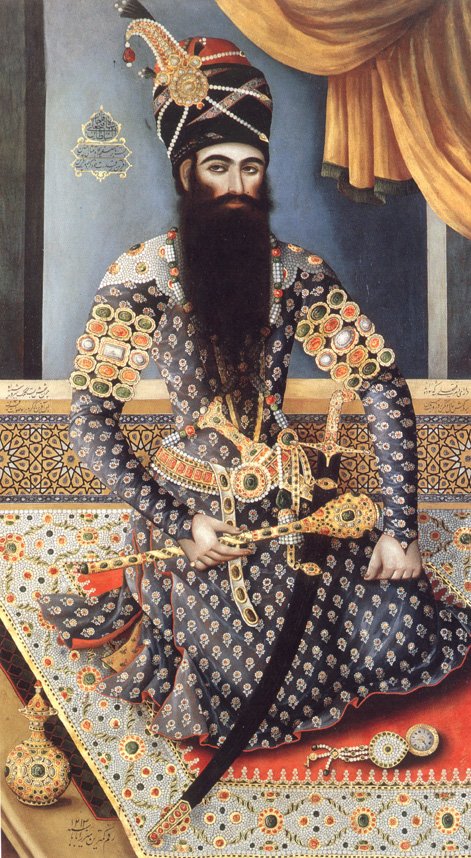
1811: Last Shah of Qajar, showing off jewelry, painter Mirza Baba, from National Museum of Iran, Tehran.
0
years of obsessing over untold love story
AKINAKA Series: origin Story
I feel I’ve been working on this print work for over ten years.
It all started with a Reddit post. Someone had shared images of Persian playing cards printed in the 1920s, and people couldn’t stop talking about how beautiful they were. One comment simply said:
“Someone should bring these back.”
And that stayed with me. A few weeks later, while sitting at my very ordinary tech job, I realized I was still thinking about those cards. Eventually I found an original deck from the 1950s on eBay. It wasn’t cheap—about $500—but I bought it anyway. The cards had been printed in Spain and represented a fascinating chapter of Iranian design history.
I had an office at WeWork then. It was pretty empty during the weekends. I carefully scanned every card and started teaching myself digital restoration, formatting, framing art, card design, and so forth. Card design is a very rigid field. It’s very similar to technical engineering drawings. For example, there is minimum thickness of a lines that both shows printer capability, ink adhesion and human eye ability to track defects. A good card should not enable cheaters to cheat more. First it was GIMP through YouTube tutorials, then Photoshop, and later Topaz Gigapixel as I learned how to prepare artwork for larger prints. Along the way I found myself organizing thousands of files scattered across old laptops, learning digital archiving, color correction, typography, and print production.
At one point I started printing the artwork on shirts, posters, and mugs. People loved them. But I always knew the real goal wasn’t merchandise. I wanted to bring the cards back to the table. Before COVID, I contacted The United States Playing Card Company (USPCC) for a quote. To my surprise, they replied. That gave me the confidence to believe this project might actually become real. When the pandemic delayed everything, I kept learning instead—refining the artwork, improving the typography, and gradually moving from restoration toward creating something original.
In 2025, after years of work, the first production run finally happened.
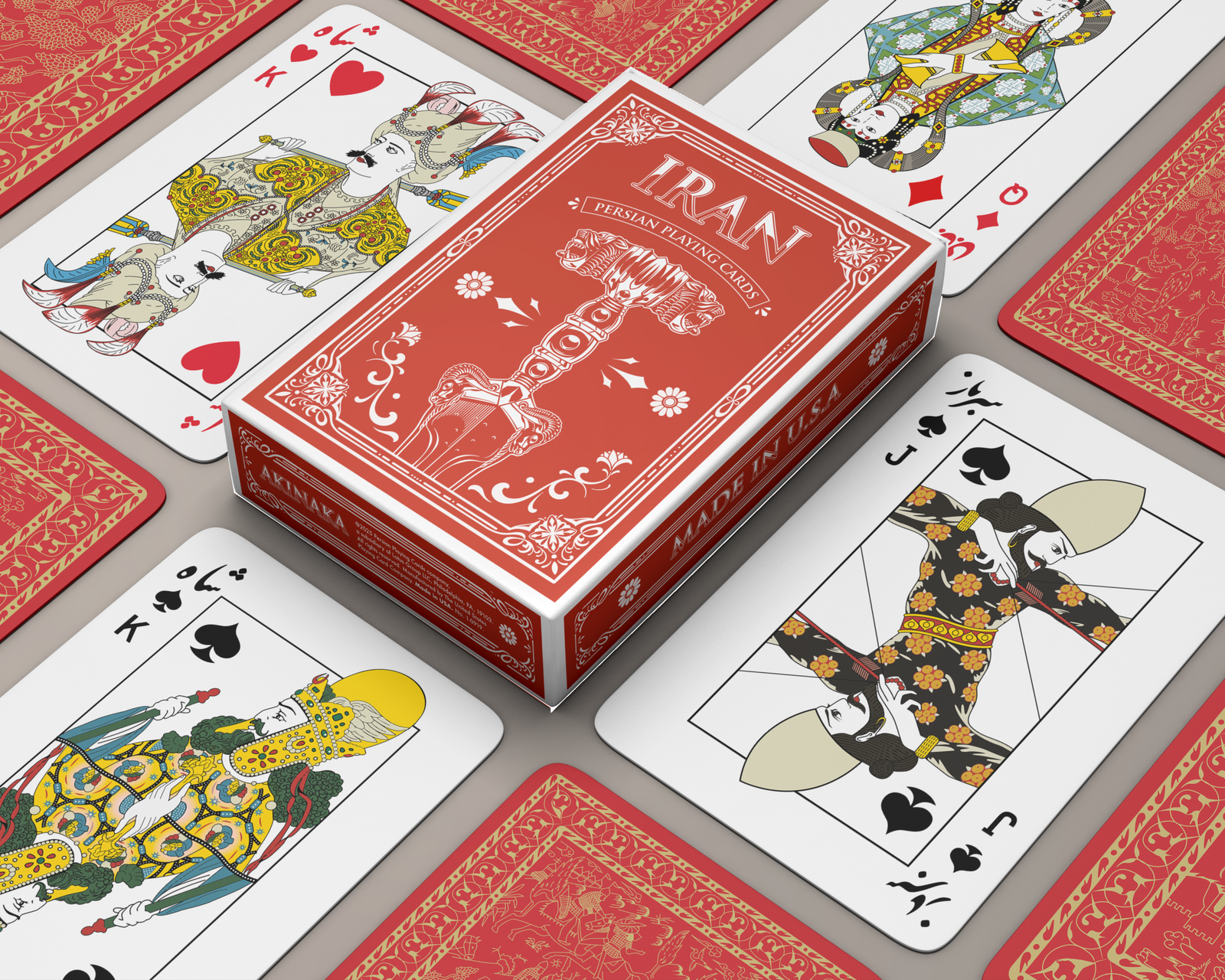
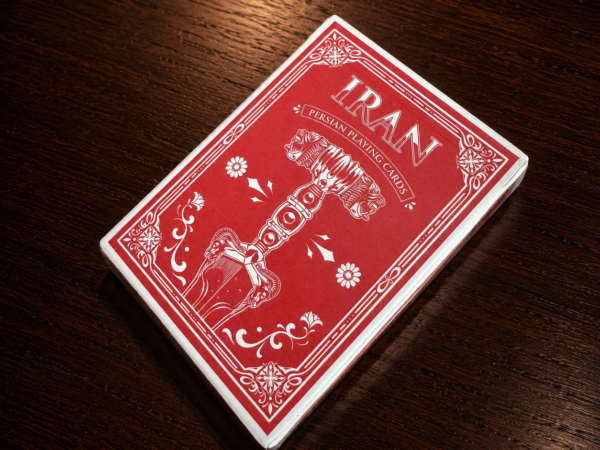
When I opened the first box and held the finished deck in my hands, it smelled like a brand-new deck of cards. It’s a unique smell, unlike anything else. And it immediately made me happy. The first collection is called AKINAKA, with IRAN back. It’s the only edition with the same Back as the 1920s version. I tried to keep the mistakes there. I feel they are a part of the story.
I chose the name AKINAKA after the ancient short sword often worn by nobility and well-documented in the Greek historian books. It later influenced similar sword designs across Asia, including the Japanese famous Katana. It felt like a fitting name to me. Playing Cards traditionally, that is from 1600s to 1900s, were considered a highbrow, rich-kid, Art. To me, playing cards are Arts for common people and the name is a good Juxtaposition, and I like it for that: Akinaka Series.
I care about playability.
Although these decks are inspired by historical Persian playing cards, they are not reproductions. I wanted to create something that respected the originals while also feeling comfortable in a modern game night. That meant redesigning borders, typography, layouts, symbols, and making the cards easier to read and play with. We’re doing our own fonts. Font design for cards is condensed taller forms. They are tighter when put together, and Farsi and Arabic letters don’t play well in tight spaces. Everything is limited in card-design work, and very little work is done with Farsi and Arabic lettering in this type of art.
I want people to play with these cards and kids learn Farsi numbers and come up with new games. So, I’m still on a mission- I hope you buy the cards and play a hand.